Showing posts with label stir-fries. Show all posts

Sunday, April 29, 2012

Teriyaki Chicken with Noodles

When the hubby and I moved to my small hometown, we knew there would be a few trade-offs. At the top of the list are the hubby’s sisters, whom we don’t see as often as we’d like.
A distant second is running errands when the stores aren’t busy. It’s more difficult now to shop at 9:30 on a Wednesday night so I can actually look at the color of a lipstick before I buy it.
Lastly, we miss Chinese food delivery.

We didn’t do delivery frequently, but it was reassuring to know that it was always there. Spring-cleaning and you’re too tired to cook? Chinese! Surprise houseguests and you just got home from work? Chinese! Baby’s been screaming from a roseola-induced fever and you haven’t slept in four nights and it’s Thanksgiving Day? Chinese!
The hubby and I still need a regular Chinese food fix, so we make our own. This dish is healthy and quick, and you can easily change it up by using pork or beef instead of chicken, or adding different (or more) vegetables.

If you don't have sake or mirin, white wine or chicken broth are both acceptable substitutes, If you add about ¼ teaspoon of sugar or so to make up for the mirin’s sweetness.
A mushy noodle does not a happy Alyssa make, so in stir-fries, I use sturdier Chinese egg noodles, udon noodles, or soba noodles. In a pinch, you can use linguine or even ramen noodles.

Teriyaki Chicken and Noodles
Serves 3-4
1 clove garlic, minced
1½ teaspoons grated fresh ginger
1/3 cup low-sodium soy sauce
1 tablespoon sake
¼ cup mirin
1 pound boneless, skinless chicken breast, cut in thin slices

Dash of salt
2 tablespoons canola or vegetable oil
1 teaspoon dark sesame oil
2 teaspoons sugar
½ teaspoons crushed red pepper flakes (optional)
1 onion, cut in thin wedges
4 scallions, cut in 1” pieces
14 ounces fresh noodles, cooked according to package directions (about 9 ounces dried noodles)
Toasted sesame seeds, for serving


1. Combine garlic, ginger, soy sauce, sake and mirin in a bowl. Add chicken and toss until coated, and sprinkle with salt. Refrigerate 30 minutes.


2. Add 1 tablespoon canola oil and ½ teaspoon sesame oil to a wok. Heat over medium-high to high heat. Drain chicken (reserving marinade) and add to pan, stir-frying until chicken is golden and cooked through.


Remove from pan.

3. Meanwhile, add reserved marinade to a small saucepan. Add sugar and crushed red pepper flakes. Boil 2 minutes and then reduce heat. Simmer until sauce is slightly syrupy. Remove from heat.

(Bringing the sauce to a boil is essential to kill off any bacteria from the chicken. For the love of Pete, do not skip this step.)
4. Add remaining oil to the wok and add onion. Stir-fry 3-4 minutes, or until softened.

5. Return chicken to the wok. Add scallions and drained noodles, tossing well to combine. Add sauce and cook 1-2 minutes. Sprinkle with sesame seeds before serving.

Friday, January 20, 2012

Hibachi Chicken and Steak

The hubby and I love eating at Japanese restaurants, and while the hubby always starts off with some spicy sushi, I save my appetite for the hibachi dishes.

That's pretty easy to do when I don't like sushi. You have now witnessed the full extent of my willpower.

It seems like it should be something that's pretty easy to make at home, so we decided to give it a try. This came pretty darn close for us, although it still might be missing something. Maybe some sake? Extra oil? Spatulas flipping through the air and volcanic onions? We'll have to give those a shot.  

Hibachi Chicken and Steak
Serves 4-6

For the chicken:
1 pound boneless, skinless chicken, cut it bite-sized pieces 
Salt and pepper 
1 tablespoon vegetable or canola oil 
1 tablespoon soy sauce 
1 tablespoon butter 
1-2 tablespoons stir-fry or teriyaki sauce (I used a spicy apricot sauce, sort of like General Tso's) 

For the steak:
1 pound sirloin, cut in bite-sized pieces 
Salt, pepper, and Montreal Steak seasoning 
1 tablespoon vegetable or canola oil 
1 tablespoon soy sauce 
1 tablespoon butter 

1. Heat 1 tablespoon oil in a large skillet or wok over medium-high heat.

2. Add chicken, and sprinkle with salt and pepper. Cook until chicken is starting to brown on both sides, about 3-4 minutes.

3. Add 1 tablespoon soy sauce and 1 tablespoon butter. Cook until chicken is cooked through, about 2-4 minutes.


4. Add stir-fry or teriyaki sauce and toss chicken to coat.


5. Meanwhile, heat remaining oil in another skillet or wok over medium-high to high heat. (You can go a little hotter with the sirloin, because you don't have to worry about cooking it all the way through like you do the chicken.)

6. Add sirloin, and sprinkle with salt, pepper, and steak seasoning. Cook until sirloin starts to brown on all sides.


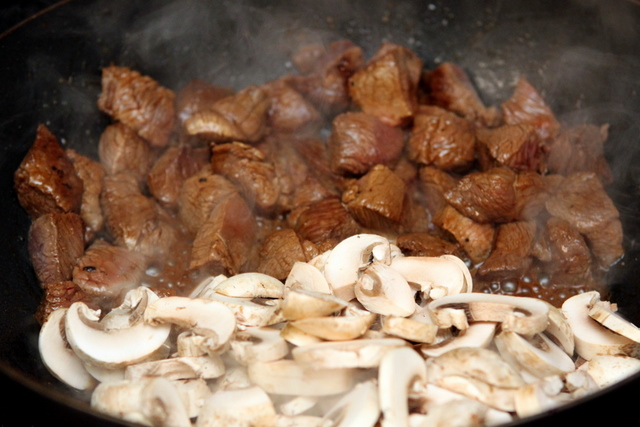
7. Stir in 1 tablespoon soy sauce and 1 tablespoon butter. If you're feeling adventurous, go ahead and toss in some mushrooms.


8. Cook until sirloin is cooked through to desired doneness.


Tuesday, January 17, 2012

Broccoli Lo Mein with Chicken or Pork

I love Chinese food, and easy access to it is one thing that I really miss since we moved to our itty-bitty community. Along with pizza delivery, grocery stores that are open past 4 p.m. on Sundays, and my sisters-in-law. Not necessarily in that order.

I've been cooking a lot more Chinese food at home as a result, although much of it still lacks the restaurant-style appeal. (Am I missing the MSG? Should I let it sit under a heat lamp for a few hours?)

I gravitate toward lo meins, especially, because like most toddlers, the little man loves him some noodles. Also, I hate making rice. And macaroni and cheese from a box. And Rice Krispie treats. But we've been through that before.

More so than any lo mein recipe I've tried cooking, this adapted one from America's Test Kitchen tastes more restaurant-style. But fresher and healthier. The sauce is light, yet still flavorful.

I used pork and broccoli in this version, but I can't wait to try this again with chicken, and maybe swap in some other veggies for some of the broccoli.

Broccoli Lo Mein with Chicken or Pork
Serves 4-6

6 ounces dried linguine
2 tablespoons toasted sesame oil
3 tablespoons oyster sauce
3 tablespoons soy sauce
2 teaspoons cornstarch
1/2 cup water, divided
2 tablespoons vegetable oil, divided
1 pound pork loin, cut in 1/4" slices
12 ounces broccoli florets
4 scallions, chopped
2 cloves garlic, minced
Crushed red pepper flakes, for sprinkling

1. Cook linguine according to package directions in salted water, until al dente. Drain and rinse under cold water. Toss with sesame oil.

2. Meanwhile, in a small bowl, combine oyster sauce, soy sauce, cornstarch, and 1/4 cup water. Set aside.

3. Heat 1 tablespoon vegetable oil in a wok or skillet over medium-high to high heat.

4. Turn on your range hood fan and open a few windows. (This is optional, but still recommended.)

5. Add half the pork to the wok and stir-fry until golden, about 2-4 minutes.

6. Transfer pork to a plate and repeat with remaining vegetable oil and pork. Again, transfer pork to a plate.

7. Add broccoli and remaining 1/4 cup water to wok. Cook, covered, until broccoli is just tender and water has evaporated, about 3 minutes.

8. Add scallions and garlic and cook until fragrant, about 1 minute.

9. Return pork to skillet. Add sauce and noodles and toss until well coated. Sprinkle with crushed red pepper flakes, if desired.

Thursday, December 15, 2011

Korean Steak

Every once in a while I have to take a break from holiday baking to cook some real food for the family. This is a variation of a recipe that I found on allrecipes.com, and I've been anxious to try it because I really like Korean beef. The marinade has a longer list of ingredients, but it really does come together quickly.

I've read before that adding Asian pear to the marinade helps soften and tenderize the beef, but I'd never before seen an Asian pear in my grocery store. Luckily, kiwi can be used as a substitute (but just use a very small amount, like a fraction of a teaspoon). However, when I went to my supermarket to grab a kiwi, what should I find next to the kiwifruit, but Asian pears! (Actually, the sticker on the fruit said "Apple Pear," but the sign said "Asian pear.") I just grated up enough of the peeled fruit to make 1/4 cup of mush to add to my marinade.

I made a few other changes, as well, and I really liked how this turned out. My only complaint is that I typically like more vegetables in my stir-fry, so I think I'd add some next time. I served this with fried rice, in the meantime, and ended up sort of stirring it all together like a Korean beef-fried rice.

Korean Steak
Serves 4-6

Marinade:
1/4 cup shredded Asian pear
2 pounds thinly sliced steak
1/4 cup soy sauce
1/4 cup low-sodium soy sauce
2 1/2 tablespoons sugar
2 1/2 tablespoons brown sugar
2 1/2 tablespoons sesame seeds (I had to leave these out)
3 scallions, thinly sliced
2 cloves garlic, minced
1 teaspoon grated ginger
5 tablespoons mirin
1/2 teaspoon sriracha

Stir-fry:
2 tablespoons sesame oil
1 teaspoon vegetable oil
1 onion, sliced lengthwise

1. Combine all marinade ingredients in a large zip-top bag. Refrigerate at least 4 hours, but not more than 24 hours.

2. Before cooking, sprinkle meat with sesame oil.

3. Heat oil in a wok or large skillet over high heat. Stir-fry onion and beef (discarding the marinade) until beef is no longer pink, about 5-10 minutes.

Thursday, August 18, 2011

Saucy Pork Stir-Fry

I'm always on the lookout for yummy stir-fries that I can make at home, and that taste even remotely close to the restaurant stir-fries that I crave. However, I'd also like them to be lower in fat than restaurant dishes, and not be loaded with sodium.

This is a pretty sauce dish, but the sauce is packed with flavor, so that's OK by me. The sauce has just a bit of sweetness and spice, and the tomato paste gives it an extra depth of flavor and a sort of heaviness (in a good way) that some stir-fry sauces lack.

This sauce recipe is based on a Cuisine at Home recipe, but I made several changes and substitutions and math errors, so I really have no idea what the original recipe was supposed to be like.

And did I mention the dish is saucy? If I'd had twice as many vegetables on hand, I would have added them, and there would have been plenty of sauce. So that's what I'm going to suggest for the recipe, and next time, I'll throw in a bunch of broccoli or something. There's plenty of sauce to soak up, so you might as well load the dish up with as many veggies as you can!

Saucy Pork Stir-Fry
Serves 4-5

16 oz. pork loin, cut in thin strips
6 Tbsp. lite soy sauce, divided
1 c. low-sodium chicken broth
1/2 c. dry sherry
2 Tbsp. cornstarch
2 Tbsp. honey
2 Tbsp. tomato paste
2 tsp. minced garlic
1 tsp. minced fresh ginger
Pinch of freshly ground black pepper
Pinch or two of cayenne pepper
2 tsp. canola oil, divided
2 Tbsp. minced garlic
1 Tbsp. minced fresh ginger
4 c. fresh vegetables, chopped (bell peppers, carrots, broccoli, mushrooms, etc.)

1. Combine pork and 2 Tbsp. soy sauce in a dish. Cover and refrigerate while preparing the sauce.

2. Stir together 4 Tbsp. soy sauce, broth, sherry, cornstarch, honey, tomato paste, 2 tsp. garlic, 1 tsp. ginger, pepper, and cayenne for the sauce. Set aside.

3. Preheat a wok over medium-high heat. Add 1 tsp. oil.

4. Stir-fry pork until it's cooked through, about 4-5 minutes.

5. Remove pork from wok and set aside.

6. Add remaining 1 tsp. oil to wok. Add 2 Tbsp. garlic and 1 Tbsp. ginger and stir-fry about 30 seconds. Add veggies.

7. Return pork to wok and add sauce. Cook until sauce thickens, about 2-3 minutes.


Tuesday, August 16, 2011

Easy and Light Fried Rice

I really like fried rice, but I still tend to use it as a base for stir-fries rather than eating it on its own. So I like my fried rice to have a pretty mild flavor.

I've tried making fried rice several times at home, and while it looks so simple, it's been troublesome for me. I tend to to overdo it with the soy sauce, and my rice tends to get really, really salty.

This recipe had about the perfect ratio of rice to soy sauce to suit my tastes (and the lite soy sauce certainly helped), and is incredibly easy to make. And while I went pretty basic, you can certainly add any veggies that you like -- mushrooms, bell peppers, broccoli, etc. But if you add more veggies, you might want to serve the fried rice with some extra soy sauce on the side, just in case your spreading your flavor too thin.

Easy and Light Fried Rice
Serves 4

1/2 c. shredded carrot
1/2 c. finely chopped onion
1/2 tsp. minced fresh ginger
1 clove garlic, minced
4 c. cold cooked brown rice
3-4 Tbsp. lite soy sauce
2 eggs, beaten
1/8 tsp. pepper
1/3 c. frozen peas

1. Spray large wok or nonstick skillet with cooking spray. Heat over medium-high heat until hot. Add carrot, onion, ginger, and garlic. Cook and stir about 1-2 minutes.

2. Stir in rice and soy sauce. Cook over low haet 4-5 minutes, stirring occasionally.

3. Move rice mixture to one side of skillet. Add eggs and pepper to the other side. (I added an extra quick shot of cooking spray to the side of the skillet before adding the eggs.)

4. Cook over medium-low heat 3-4 minutes, stirring occasionally, until eggs are cooked. Add peas to rice and egg mixture and stir thoroughly to combine.

5. Heat through, and serve with extra soy sauce, if needed.


Tuesday, March 8, 2011

Green Goodness Veggie Stir-fry

The little man's gotta-have-it food of the week is ... broccoli. (Admit it. You're broccoli-green with envy, aren't you?)

My favorite way to serve broccoli is in any sort of stir-fry. We threw together this light dish to go with our Chinese crab cakes the other night, so the little man wouldn't stare down in his plate in disgust, wondering where his veggies have gone.

I also added in a few other veggies (a purging of the crisper, if you will), and threw in some frozen edamame just to see what the little man though. I mean, he loves beans. So he should love soybeans. Right? Right. (And he did.)

The sauce in this dish is very light -- it doesn't weigh down the veggies like a lot of stir-fry sauces, so you actually get to taste the veggies. I don't think it could stand alone as an entree in our carnivorous house, but it's a wonderful side, especially when serving other dishes with stronger flavors.

Green Goodness Veggie Stir-fry
Serves 4-6

1 tsp. vegetable or canola oil
1 head broccoli, cut in bite-sized pieces
1 small onion, cut in chunks
2 bell peppers, cut in chunks
1 carrot, peeled and cut in matchsticks
1 c. frozen edamame
(Any other vegetables you like)
3/4 c. chicken broth
1 Tbsp. soy sauce
1 clove garlic, finely chopped
1/2 tsp. grated fresh ginger
3 tsp. cornstarch

1. Heat oil in wok over medium-high heat. Meanwhile, combine broth, soy sauce, garlic, ginger, and cornstarch in a small bowl.

2. Add veggies to wok.

3. Stir-fry until crisp-tender, about 5 minutes.

4. Add sauce. Cook, stirring, until sauce thickens.

Sunday, October 24, 2010

Korean Chicken Noodle Bowls

I love Korean food. Of course, I've only eaten Korean food either at home or at Japanese restaurants, so I have no idea if I love real Korean food. But I do love my version of Korean food.

So I jumped all over this recipe, which I saw in Rachael Ray's Everyday magazine. What's not to like? Stir-fry? Good. Noodles? Good. Kimchi-like sauce? Good.

And it WAS good. However, I did make modifications that I think made it better. Namely, I added extra veggies and reduced the amount of noodles that were called for. But the recipe still made too much of a good thing (after three meals of this, even the little man grew weary), and was too heavy on the pasta for my tastes. I think the recipe would improve with even less pasta, which I adjusted in this recipe.

Even though it takes away from the kimchi nature of the recipe, I think you can swap in any veggies that you've got on hand. And while I like the texture of whole-wheat pasta here, you could use regular old pasta or Asian noodles in its place.

Korean Chicken Noodle Bowls
Serves 4

Salt and pepper
8-10 oz. whole wheat spaghetti
1" piece of ginger, grated
2 large cloves garlic, grated
1/4 c. tamari
3 Tbsp. honey
2 Tbsp. tomato paste
2 Tbsp. rice wine vinegar
1 Tbsp. sesame oil
1 tsp. sriracha
2 Tbsp. vegetable oil
1 lb. boneless, skinless chicken, cut in thin strips
1 c. coleslaw mix
1/2 red bell pepper, thinly sliced
1/2 zucchini, cut in thin strips
1 c. mushrooms, sliced
3 scallions, thinly sliced

1. Bring a large pot of water to boil.

2. In a blender or food processor, combine a splash of the boiling water with the ginger, garlic, tamari, honey, tomato paste, vinegar, sesame oil, and sriracha. Blend until smooth.

And then taste it, and adjust your seasonings accordingly. Rachael Ray is fond of eyeballing measurements, which I did. Mine was a bit on the salty side, so I decided to add some more honey and sriracha to make it sweeter and spicier.

3. Salt water and add pasta, cooking according to package directions. Drain the pasta well.

4. When pasta is almost finished cooking, heat oil in a skillet over high heat. Add chicken and stir-fry, about 3-5 minutes.

5. Add cabbage, pepper, zucchini, and mushrooms, Stir-fry for 2 minutes.

6. Add the ginger sauce and toss for 1 minute.

7. Pour stir-fry over the drained noodles and top with scallions.

Wednesday, June 16, 2010

Szechwan Beef

For years, the hubby has made a lovely Szechwan chicken stir-fry, the secrets of which he might never fully share with me. So I decided to try my hand at a beef version this evening, because I've never tried Szechwan beef.

OK, fine, it was because we had sirloin in the kitchen freezer, and the chicken is very far away, in the garage freezer. And I'm lazy. And the light bulb in the garage just burned out. And I'm not supposed to stand on things while the hubby isn't around, because I'm clumsy. And every time I walk in the garage when it's dark, I dislocate my toe, because I'm clumsy AND I have very fragile baby toes.

I share. I share too much.

Szechwan dishes are typically on the spicier side, and although I've had my share that have made my eyes water and my nose run, this dish (which is from Better Homes and Gardens), is actually on the milder side. You can certainly increase the amount of crushed red pepper flakes, or even add some sriracha or other hot sauce, to amp up the heat.

Szechwan Beef
Serves 4

3 Tbsp. dry sherry
3 Tbsp. soy sauce
2 Tbsp. water
2 Tbsp. hoisin sauce
2 tsp. cornstarch
2 tsp. grated ginger
1 tsp. sugar
1/2 tsp. crushed red pepper flakes
1/4 tsp. black pepper
2 cloves garlic, minced.
1 lb. steak, thinly sliced
2 carrots, peeled and thinly sliced
2 green bell peppers, cut in cubes
1 Tbsp. vegetable or canola oil
Cooked rice, for serving

1. Combine the sherry, soy sauce, water, hoisin sauce, cornstarch, ginger, sugar, red pepper flakes, pepper, and garlic in a small bowl. Set aside.

2. Put oil in wok and heat over medium-high heat until hot.

3. Add carrots and stir-fry 2 minutes. Add peppers and stir-fry another 1-2 minutes.

4. Remove vegetables from pan and set aside.

5. Add beef and stir-fry 2-3 minutes, or until cooked.

6. Push beef away from center of wok, and add sauce. Reduce heat to medium, and cook and stir sauce until thick and bubbly.

7. Add veggies back to wok, and combine with beef and sauce.

8. Serve over rice.

Saturday, April 24, 2010

Grilled Chicken Lo Mein

This recipe is one of those wonderful clean-out-the-fridge recipes. It's a great use for leftover chicken and whatever veggies are left in your veggie drawer. I threw on some teriyaki and sriracha-marinated chicken breasts when the hubby was grilling earlier in the week, in the hopes that I'd have a use for some cooked chicken.

Because the chicken is already cooked, this comes together very quickly for a weeknight meal. I used instant Asian noodles that were ready in about 3 minutes, making it even faster.

And speaking of leftovers, like all pasta, this doesn't reheat terribly well. Am I the only one who has that problem?

Grilled Chicken Lo Mein
Serves 4

1/2 c. chicken broth
6 Tbsp. reduced-sodium soy sauce
1/4 c. water
1/4 c. rice vinegar
1/2 Tbsp. honey
1/2 tsp. sriracha
1/2 tsp. toasted sesame oil
1 tsp. minced fresh ginger
1/4 tsp. crushed red pepper flakes
2 tsp. cornstarch
1 tsp. canola oil
3-4 c. fresh chopped veggies (broccoli, onion, carrots, mushrooms, peppers, etc.)
2 garlic cloves, minced
1 lb. boneless, skinless chicken, cooked and cut in thin strips
8 oz. Asian noodles or other pasta, cooked according to package directions


1. Combine chicken broth through cornstarch in a small bowl and set aside.

2. Heat oil in a wok over medium-high heat. Add veggies and stir-fry until crisp-tender, about 3-4 minutes.

3. Add chicken and sauce mixture. Let mixture come to a boil, then reduce heat and cook until thickened, about 1 minute. (You still have to add the pasta, so you don't want this too thick.)

4. Stir in cooked pasta until everything is combined with the sauce.

Saturday, March 6, 2010

Korean Tacos

In the past two weeks, the little man has had two ear infections, two nasty colds, bronchitis, pneumonia, and the worst teething episode in the history of mankind. (Not exaggerating.) It's still hard to talk about it. The pain is too fresh.

Did I mention he's passing a lot of this stuff on to me? think we're going to back off on teaching him to sit and focus on teaching him to politely cover his mouth when he coughs and sneezes. He's lucky he's cute.

Anyway, the little man and I were watching an episode of The Best Thing I Ever Ate on Food Network one day, and Adam Gertier mentioned these Korean taco-thingamajigs that he gets from a traveling taco truck. This made me long for both a traveling taco truck and a Korean taco, and I figured I could at least manage the latter.

I love bulgogi, so I used the sauce from my favorite bulgogi recipe, and topped the tacos with some cheater's kim chee. Spicy, sweet, and delicious!

Korean Tacos
Serves 4-6

1 1/4 lb. steak
1/3 c. soy sauce
¼ c. brown sugar
¼ c. rice wine vinegar
2 Tbsp. soy sauce
2 Tbsp. fresh ginger, grated
2 cloves garlic, minced
2 tsp. toasted sesame oil
2 tsp. sambal oelek
1 Tbsp. water
1 tsp. cornstarch
8-10 small flour tortillas (about 6")
1 tsp. oil

Salt and pepper
2 c. coleslaw mix or shredded napa cabbage
1/2-1 tsp. sambal oelek
2 scallions, thinly sliced

1. Cut the steak in very small, thin slices, and marinate in 1/3 c. soy sauce for 1 hour.

2. Meanwhile, combine brown sugar, rice wine vinegar, 2 Tbsp. soy sauce, ginger, garlic, toasted sesame oil, 2 tsp. sambal oelek, water, and cornstarch. And heat your tortillas.

3. Heat oil in a wok over high heat. Remove steak from soy sauce with a slotted spoon, sprinkle with salt and pepper, and stir-fry until brown, about 4 minutes.

4. Reduce heat to medium and add sauce mixture. Cook until thickened, about 1-2 minutes.

5. Combine coleslaw mix with sambal oelek, to taste. (Remember that the beef will be spicy, too.)

6. Top heated tortillas with beef, coleslaw mix, and scallions.

Sunday, January 10, 2010

Beef and Broccoli

It's been an interesting week around the house. I returned to work full-time and the little man started daycare. So far, so good -- but holy hectic, Batman. I feel like I'm running around nonstop for at least 16 hours each day.

The little is happy with his setup. It's a very small daycare, but he seems to find the new surroundings terribly interesting. He sings in the car on the way there in the mornings, smiles and talks to his teachers, and thinks the other kids are fascinating. (Unless they cry or scream. Then they're just an-NOY-ing.) He gets to play with new toys and be involved in the daily activities (tummy time class, anyone?).

It makes for some stressful meal-planning, however, because I never know what I'll find when I pick him up in the afternoon -- happy baby, sleeping baby, or monster baby. Some evenings I might have an hour to prepare supper, and some evenings I finally make some scrambled eggs at 7. Needless to say, the hubby and I will be cooking ahead on the weekends for a while.

However, we did have another snowstorm this week. The roads were so awful that the hubby was sent home from work early (he works about 40 miles away). So while the hubby spent some quality Jack-baby time, I made some beef and broccoli. This is based on a recipe from Great American Recipes, which is a company that sends sample recipe cards in the mail, hoping you'll buy more. I don't, but I also can't help but flip through them, and I'm still looking for my favorite beef and broccoli recipe.

Surprisingly enough, this one might be it. Not too salty, saucy, or beefy, this stir-fry manages to be both light and very flavorful. And the pepper gives it just a bit of kick, especially if you use freshly ground.

Beef and Broccoli
Serves 3-4

1/4 c. soy sauce
1 Tbsp. lemon juice
1/2 Tbsp. cornstarch
1/2 Tbsp. dark brown sugar (I'm assuming light works, as well)
1 clove garlic, minced
1/2 tsp. freshly ground black pepper
1 tsp. freshly grated ginger
1 Tbsp. vegetable oil, divided
1 lb. sirloin, thinly sliced
1/2 medium onion, cut in bite-sized slices
1 medium head broccoli, cut into bite-sized florets
Cooked rice, for serving

1. In a small bowl, combine soy sauce, lemon juice, cornstarch, sugar, garlic, pepper, and ginger.

2. Heat 1/2 Tbsp. oil in a wok or skillet over medium-high heat. Add beef and stir-fry until cooked.

3. Remove beef from pan.

4. Heat remaining oil in skillet. Add onion and broccoli and stir-fry about 3-4 minutes, or until veggies are crisp-tender.

5. Return beef to skillet. Reduce heat to medium and add sauce. Cook until sauce is slightly thickened, about two minutes.

6. Serve over rice.

Monday, November 16, 2009

Chicken and Broccoli Stir-fry

I was going to start this post by mentioning that we had a busy week, except that I think I've started off my last 13 posts that way. So instead, I'll say that we had a harrowing week. It was full of drama. Suspense. Anxiety. Sleepness nights. Sitting on pins and needles, awaiting news from the hospital.

Luckily, we had a happy ending; the hubby and I are officially an aunt and uncle! My sister-in-law deserves a gold medal in the Childbirth Olympics, but I'm sure she'll be even happier to take home her beautiful baby boy. We're hoping to meet him when he goes home this week, and we hope that the Jack-baby and his cousin Connor will be good pals.

The hubby was going to and from the hospital most of the week, so I made a batch of this stir-fry to nosh on while the little man and I hung out at home. (Little men aren't allowed to visit the hospital during swine flu epidemics.) This is modified version of a Healthy Cooking recipe, and it was surprisingly tasty. I think you can swap in whatever veggies you have on hand -- I certainly did -- but I'd definitely recommend using the reduced-sodium soy sauce instead of the regular. (I was too lazy to open a new bottle of reduced-sodium, and I regret that.)

Chicken and Broccoli Stir-fry
Serves 4

1/ c. chicken broth
6 Tbsp. reduced-sodium soy sauce
1/4 c. water
1/4 c. rice vinegar
2 garlic cloves, minced
Dash of cayenne pepper
1 lb. boneless, skinless chicken, cut in thin strips
2 tsp. cornstarch
4 tsp. canola oil, divided
2 c. fresh broccoli florets
1 c. sliced fresh mushrooms
1/2 c. canned sliced water chestnuts
1/2 c. canned bamboo shoots
2 green onions, thinly sliced
1/4 tsp. crushed red pepper flakes

1. Combine broth, soy sauce, water, rice vinegar, garlic, and cayenne pepper. Cover and refrigerate 3/4 c. Pour the remaining marinade over the chicken in a resealable bag. Marinate 1-2 hours in the refrigerator. Or for 10 minutes on the counter, if you didn't read ahead.

2. In a small bowl, combine cornstarch and reserved marinade. Whisk until smooth and set aside.

3. In a large skillet or wok, heat 2 tsp. oil over medium-high heat and stir-fry chicken until cooked, about 3-4 minutes.

Remove from pan and set aside.

4. Stir-fry broccoli and mushrooms in remaining oil for about 2 minutes. Add water chestnuts, bamboo shoots, and green onion, and stir-fry another minute.

I didn't have mushrooms. Or bamboo shoots. Or enough broccoli. So I threw in some chopped green pepper. It worked.

5. Stir cornstarch mixture and add to the pan. Bring to a boil. Stir and cook until thickened, about 2 minutes. Return to chicken to pan and combine.

Wednesday, April 22, 2009

Korean Pork Medallions with Spicy Asian Slaw

The hubby and I have been dining on leftovers all week, trying to get things done around the house, but we needed a bit of a break tonight. I flipped through a cookbook and found this quick recipe to go with our leftover potstickers, using some of the extra ingredients from those.

This recipe is from Fine Cooking, and it's virtually foolproof; I know this because I screwed it up in a variety of ways, and it still tasted fantastic. (And spicy!)

My only complaint about Fine Cooking cookbooks is that the writers don't take the time to mention when an ingredient in the list needs to be divided. Which, if you're actually reading the entire recipe, is fine. But if you're in a hurry and skimming like me, you might accidentally dump twice as much vinegar as called for into the marinade.

Not that this a problem. It's only vinegar. It's not like it has a strong flavor or anything.

I would recommend marinating the pork longer than 25 minutes (or 5 minutes, as it was in my case); I think that 6-8 hours in the fridge would infuse the pork chops with even more flavor. In that case, you could probably grill or broil the pork instead of pan-frying it, to make it healthier.

Korean Pork Medallions with Spicy Asian Slaw
Serves 4

Pork medallions
1 large or 2 small pork tenderloins (1 1/4 lbs.)
1/2 c. soy sauce
2 Tbsp. rice vinegar
2 Tbsp. brown sugar
2 cloves garlic, minced
1 1/2 Tbsp. minced fresh ginger
1/2 Tbsp. dark sesame oil
2 tsp. Sriracha
2 Tbsp. canola or vegetable oil, for frying

Asian slaw
5-6 c. coleslaw mix, or 5 c. thinly sliced Napa cabbage and 1 c. grated carrots
2 green onions, thinly sliced
1 Tbsp. canola oil
1 tsp. salt
2 Tbsp. rice vinegar
1 Tbsp. brown sugar
1/2 Tbsp. dark sesame oil
1 tsp. Sriracha

1. Trim pork, and cut in 1/2" slices.

2. Combine pork marinade ingredients (everything but the canola oil), and pour 1/2 c. over pork in a small bowl. (Set the rest aside for serving.) Marinate at least 2 hours, refrigerated, or 25 minutes at room temperature.

3. Combine slaw ingredients in a large bowl. Let sit 15 minutes, and toss again.

4. Heat 2 Tbsp. canola oil in a large, heavy skillet over medium-high heat, until oil is quite hot. Add pork, but don't overcrowd the pan (cook in two batches, if necessary). Cook 2 minutes. Flip and cook until pork is just cooked through, about 2-3 minutes.

5. Serve pork with slaw and additional sauce, if desired.

Wednesday, March 4, 2009

Beef with Green Peppers

For supper tonight, the hubby and I tried a modified version of a recipe that we tasted during a Chinese cooking class last fall. It’s a pretty simple and mild beef stir-fry with green peppers, nice and light.

This is an excellent weeknight recipe because it comes together quickly. It cooks very fast, however, so as with most stir-fry recipes, you want to prepare all your ingredients before you start cooking. (You’ll only have about five minutes from start to finish with the cooking time.)

The flavor of the garlic, ginger, and sesame oil really pop out in this stir-fry. Use the dark sesame oil, because the flavor and fragrance is so much more intense. As I was preparing my ingredients, I told the hubby how much I love the smell of sesame oil. About a half-hour later, he leaned over to talk to me, and I noticed he’d slathered some on.

I do love a man in dark sesame oil.

Beef with Green Peppers
Serves 4

Marinade
2 tsp. sugar
½ tsp. salt
½ tsp. baking soda
2 Tbsp. soy sauce

1¼ lb. steak, thinly sliced
1 Tbsp. oil
2 cloves garlic, minced
1 tsp. grated ginger
2 large green bell peppers, seeded and cubed
1 Tbsp. oyster sauce
1 Tbsp. soy sauce
2 tsp. sesame oil
1 tsp. white pepper
1 Tbsp. cornstarch
¼ c. water

1. Combine marinade ingredients. Add to beef and marinate at room temperature for 15 minutes.

2. Heat oil in a wok over high heat. Add beef and stir-fry until brown.

3. Reduce heat to medium-high. Push beef to sides of wok and add garlic and ginger. Stir-fry until brown, about 30 seconds.

4. Add peppers and stir-fry 2-3 minutes, or until peppers are crisp-tender.

5. Meanwhile, combine oyster sauce, soy sauce, sesame oil, and pepper. Add to wok and cook about 1 minute.

6. Combine cornstarch and water. Add to wok and cook until sauce thickens (which should be almost right away).

7. Remove from heat, and serve stir-fry with rice.

Tuesday, January 6, 2009

Korean-Style Beef Bulgogi

I’ve had a horrendous two-day headache that is finally on its way out, and to celebrate, the hubby and I made potstickers this evening. (We watched Kung Fu Panda again recently. That makes me starving for potstickers.) We also did a taste test in what became the Ultimate Battle of the Bulgogi.

I love bulgogi. It’s kinda sweet and kinda hot. You know, like me. (HAHAHAHAHA. Ahem.) I eat bulgogi a lot when the hubby and I go to his favorite sushi restaurant, because I don’t like sushi. And it looks pretty darn simple to make at home.

On to the battle. In the first corner, we have our prepacked creation:

We found it at the Asian market. It looked fun. And I have nothing against prepackaged foods, as long as they’re tasty and the ingredients are generally recognizable. This marinade includes 100% recognizable ingredients and no preservatives. You slice the steak and marinate it for an hour, then stir-fry or grill.

In the second corner, we have Korean-style beef bulgogi, courtesy of Cuisine at Home. The sauce is boiled until thick, and the beef is grilled and then tossed with the sauce after cooking.

We took one large steak and cut it in half, so we could get an accurate test of the two concoctions. We garnished each the same, as well, so appearances wouldn’t sway our opinions. Then we swallowed our potstickers, cleansed our palates with some milk, and dove in.

Let’s take another look at our contenders, Jim.

Packaged marinade:

Homemade sauce:

The results?

The marinated bulgogi was very tender, tasty, and the sweetness and soy really came through.

The bulgogi with the homemade sauce was chewier, but the sauce was fantastic – sweet, sour, and spicy. (It almost tasted like a General Tso’s sauce.)

The bulgogi with the homemade sauce was declared the winner, but it wasn’t a complete landslide. We decided to use the same sauce next time, but marinate the beef first. Because we really dig us some tender beef.

Korean-Style Beef Bulgogi
Serves 2-3

¾ lb. steak, cut in ¼” strips
½ c. soy sauce
Salt and pepper

Sauce
¼ c. brown sugar
¼ c. rice wine vinegar
2 Tbsp. soy sauce
2 Tbsp. fresh ginger, grated
1 Tbsp. garlic, minced or grated
2 tsp. toasted sesame oil
2 tsp. sambal oelek
1 Tbsp. water
1 tsp. cornstarch

1. Combine beef and soy sauce in a bowl and marinate, refrigerated, for 1 hour.

2. Sprinkle beef with salt and pepper and grill until cooked to desired doneness.

3. In a small saucepan, heat sugar, vinegar, soy sauce, ginger, garlic, sesame oil, and sambal oelek over high heat until mixture comes to a boil. Combine water and cornstarch into a slurry and whisk into sauce mixture. Bring mixture back to a boil and cook 1 minute.

4. Remove sauce from heat. Combine steak strips with about half the sauce, and use the remainder for dipping.